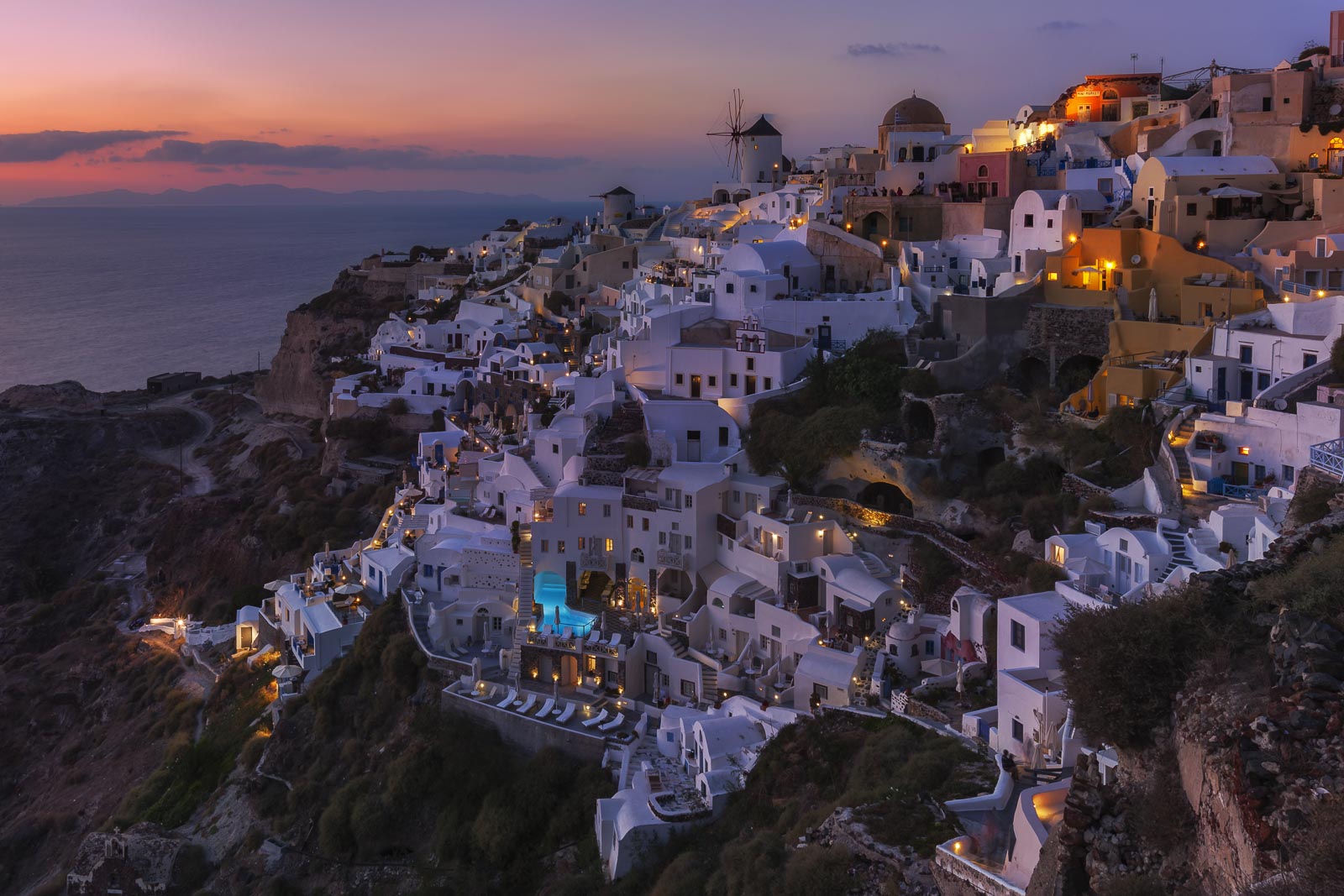
Oia Castle Ruins
18:30-19:15
The northernmost point offers a wide-angle view of the sun setting behind the windmills.

September marks the shift from peak summer to autumn light over the Aegean, delivering warmer color tones and noticeably thinner crowds along the caldera rim. The sun sets roughly thirty minutes earlier than July, and the angle of descent creates a slower, more saturated display across the volcanic cliffs.
Quick answer
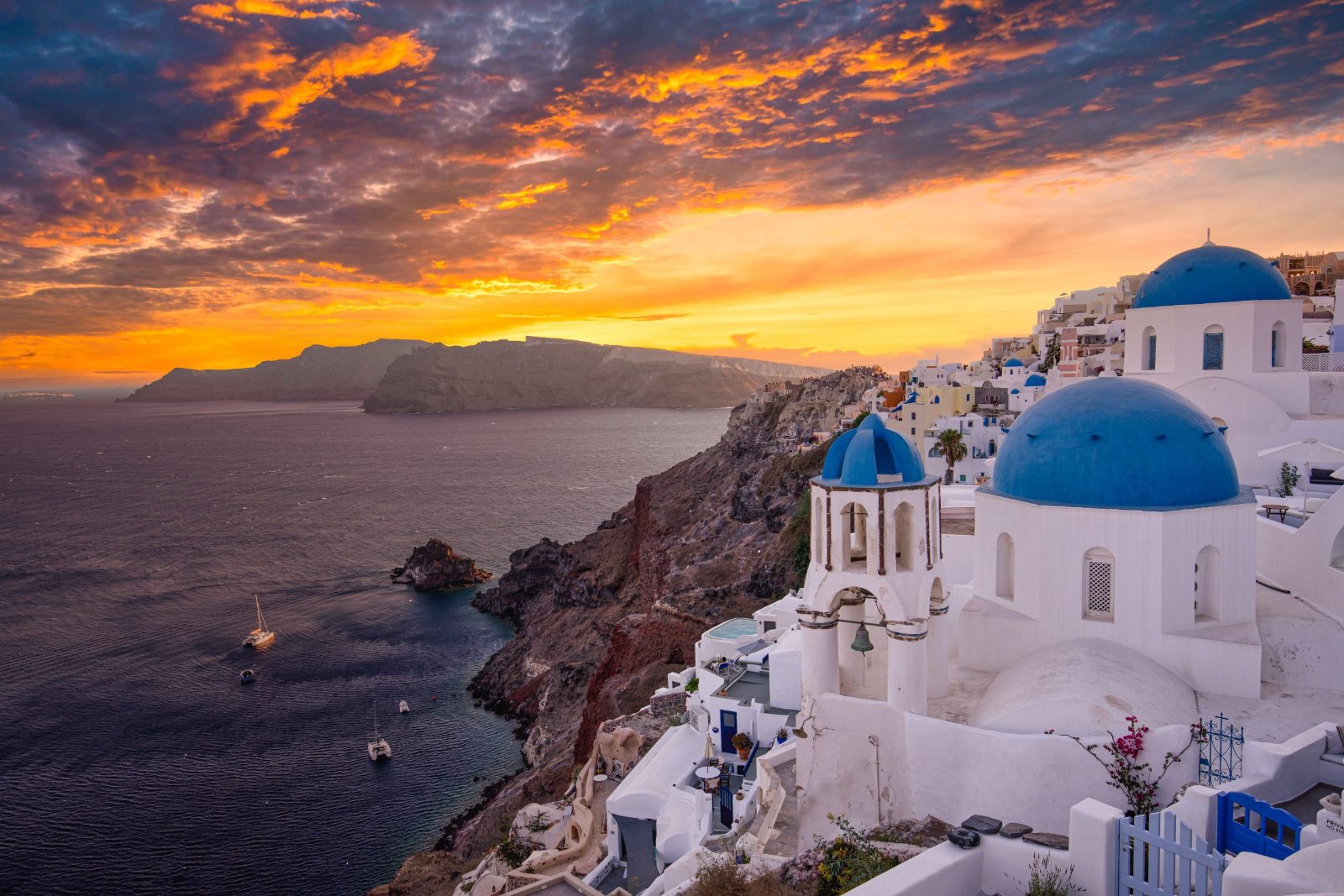
Sunset in Santorini in September occurs between 19:15 and 19:45, with the exact time shifting approximately two minutes earlier each day as the month progresses. The golden hour begins around 18:30, giving you a forty-five-minute window of warm, directional light before the sun drops below the horizon. September delivers richer amber and orange tones compared to the higher, whiter light of midsummer.
The volcanic cliffs of the Santorini Caldera throw back light differently in September than they do in July. The sun's lower trajectory sends longer shadows across the white-washed villages, and the angle of incidence—closer to horizontal—means the light travels through more atmosphere before reaching the observer. That atmospheric path filters out shorter blue wavelengths, leaving the longer reds and oranges to dominate the spectrum. The result is a warmer, deeper palette that photographers and colorists refer to as "golden hour on steroids." September also marks the end of cruise-ship season, which peaks in July and August. By the second week of September, the number of day-trippers arriving by tender drops sharply, and the caldera-facing terraces in Oia and Fira see thirty to forty percent fewer visitors. The reduced density means you can claim a vantage point without arriving ninety minutes early, and the ambient noise level drops enough that you can hear the wind moving through the alleys. The temperature during the golden hour hovers between 24 and 27 degrees Celsius, warm enough to sit comfortably without a jacket but cool enough that the stone walls stop radiating stored heat. The caldera itself is a flooded volcanic crater, and its western rim—where Oia, Imerovigli, and Fira sit—faces directly into the sunset. The drop is nearly vertical, and there are no obstructions between the clifftop and the horizon line, which sits eighteen kilometers out over open water. That unbroken sightline is rare in coastal landscapes, and it means the sun descends cleanly into the Aegean without passing behind hills or haze layers. On clear evenings, the last visible arc of the sun remains sharp until it touches the water, then compresses and disappears in under ninety seconds. September weather is statistically more stable than June or October. Cloud cover occurs on fewer than three days per month on average, and the meltemi winds—strong northerlies that blow through the Cyclades in summer—weaken considerably after the first week of September. The combination of stable air, low humidity, and minimal particulate pollution creates textbook conditions for color saturation and visibility. If you are planning around a single sunset in Santorini in September, the odds favor clear skies and unobstructed views.
“The sun's lower trajectory in September sends longer shadows across the caldera, and the extended atmospheric path filters the spectrum into deeper ambers and reds.”
September offers a transition toward milder evening temperatures, with sunset occurring between 19:15 and 19:45. Arriving during the 17:30–19:00 window is necessary to secure a viewing position before the peak evening light begins.
Warm, 24°C to 28°C
Days remain long, providing steady light until mid-month.
Mild, 20°C to 25°C
Crowds decrease slightly as the month progresses toward autumn.
Weather remains consistent
Mid-week visits offer marginally more space at popular vantage points.
Verdict: For the most consistent conditions, aim for mid-week arrivals between 17:30 and 19:00 throughout September.
The public viewing areas of the Santorini Caldera remain open 24 hours a day, seven days a week. Visitors may access these locations at any time.
Access to public caldera viewing areas in Santorini to watch the sunset is provided at no cost. No tickets are required to enter these spaces.
Verdict: The typical adult pays 0 EUR for access to public caldera viewing spots, as there are no entrance fees for these areas.
The Santorini Caldera stretches along the cliffside of Oia and Fira, accessible primarily via local bus services or designated walking paths. Navigating to these vantage points requires planning as pedestrian congestion increases significantly as sunset approaches.
KTEL public bus to Fira or Oia terminals
Follow the caldera cliff path (Nomikos Street)
Parking at designated lots outside Oia or Fira centers
Direct drop-off at nearest taxi stands in Fira or Oia
Parking within Oia and Fira is extremely limited; visitors are advised to park on the outskirts and utilize the local bus network or walk to avoid heavy traffic delays near the caldera rim.
18:30-19:15
The northernmost point offers a wide-angle view of the sun setting behind the windmills.
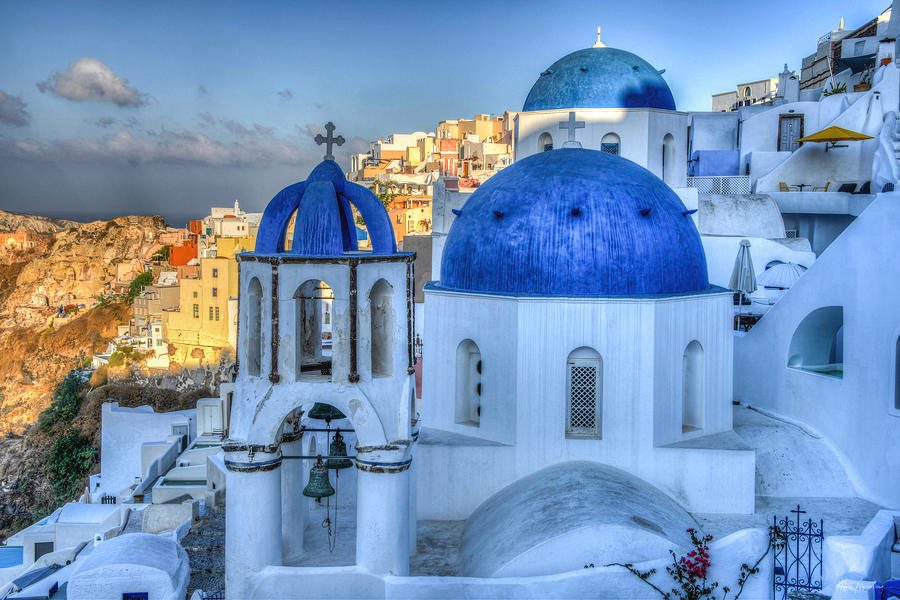
18:00-19:00
Capture the blue-domed churches with the caldera in the background for classic framing.
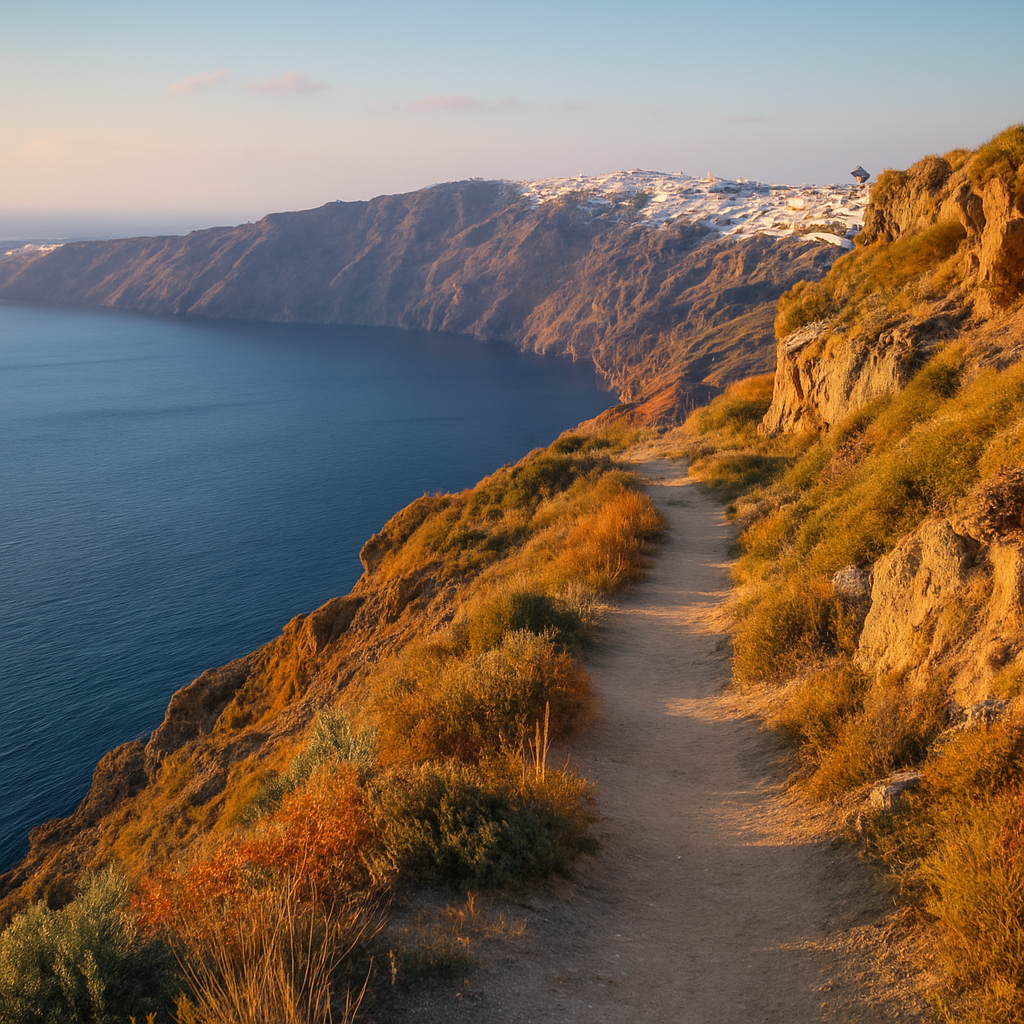
18:15-19:15
This walking path provides an unobstructed vantage point looking across the volcano toward Oia.
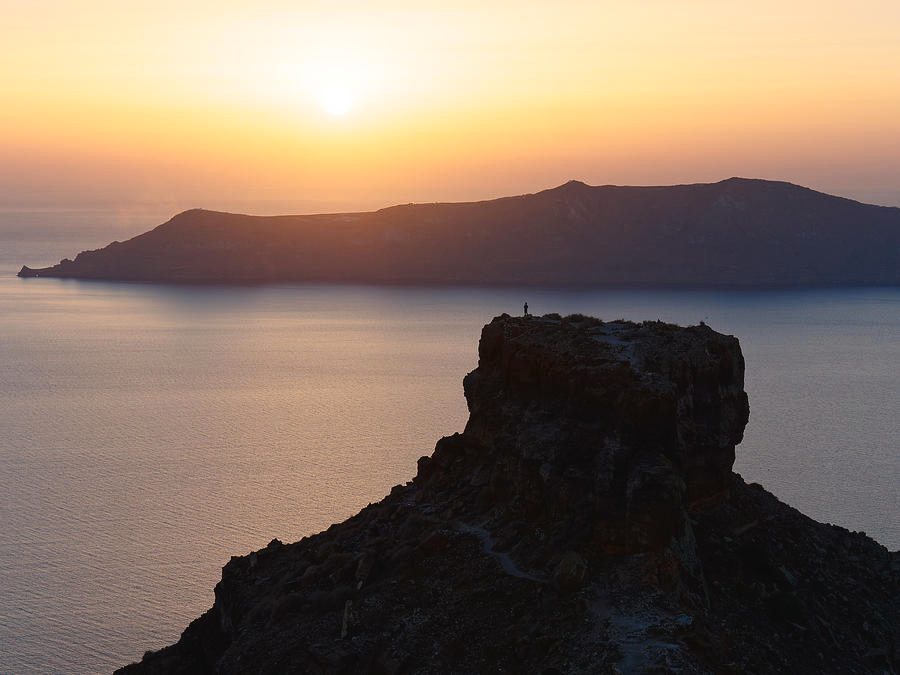
18:00-19:00
Located in Imerovigli, this promontory allows for a profile shot of the cliffs during the golden hour.
Preparation for the caldera sunset requires adapting to shifting September conditions and managing the high volume of visitors.
Temperatures drop significantly once the sun dips below the horizon, so carry a light jacket or windbreaker. The caldera breeze can be persistent throughout the evening.
Bring a microfiber cloth to clean your lens frequently as salt spray from the Aegean can accumulate on glass. A steady tripod is helpful, but be aware that narrow public walkways limit where you can safely set one up.
Wear shoes with high-traction rubber soles for navigating the uneven, polished cobblestone paths common in Oia and Fira. Leather soles become slippery on these worn surfaces, especially as dew begins to form.
Position yourself further along the caldera rim away from the primary Oia castle ruins to avoid the heaviest pedestrian congestion. Local footpaths often offer quieter vantage points with similar sightlines.
While temperatures moderate in September, the walk to elevated viewpoints remains strenuous; carry water to avoid reliance on small, crowded kiosks during peak hours.
Everything you need to know about sunset in santorini in september
In September, the sun typically sets between 19:15 and 19:45. Watching the sunset in santorini in september provides clear skies and pleasant evening temperatures.
There is 0 EUR entrance fee for public caldera viewing areas. You can enjoy the scenery at no cost throughout the Santorini Caldera region.
The recommended arrival window is 17:30–19:00 to secure a good vantage point. Planning ahead helps ensure a comfortable spot to observe the sunset in santorini in september.
The caldera remains open to the public daily from 00:00–23:59. This allows visitors to enjoy the area long after the sun has dipped below the horizon.
To capture the best view of the sunset in santorini in september, arrive early to avoid the largest crowds. Local landmarks like Oia and Fira offer varied perspectives of the horizon.
Yes, the public viewing areas are accessible to visitors of all ages. Many families enjoy the caldera landscape, though it is wise to arrive early as the best spots for a sunset in santorini in september fill up quickly.
Boat tours are a popular way to witness the horizon from the water. These excursions provide a unique vantage point away from the land-based crowds near the village cliffs.
Best Sunset Cruise Options
Read more Tickets & toursSemi-Private Cruises
Read more Tickets & toursSailing Tours
Read more GuideWhere to Watch the Sunset
Read more Tickets & toursPrivate Sunset Cruises
Read more Tickets & toursCatamaran Sunset Tours
Read more Tickets & toursSunset Dinner Cruises
Read more